Published September 10, 2026
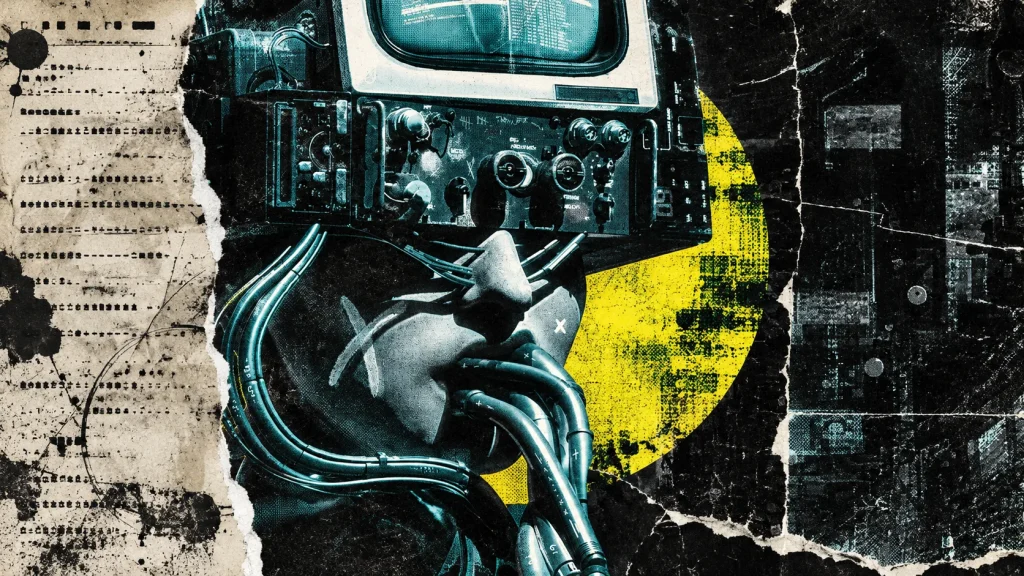
William Gibson knew very little about computers while writing Neuromancer. He paid attention to the way programmers spoke and used their language to imagine how digital systems might feel to the people inside them.
That limited technical knowledge helped the novel. Gibson focused on access and control instead of explaining how every machine worked. The result says more about digital life than many stories filled with accurate specifications.
Gibson Turned Data Into a Place
Gibson first used the word “cyberspace” in his story “Burning Chrome.” In Neuromancer, he developed it into the Matrix. Data appears as a space that Case can enter and move through. Corporate systems have visible boundaries. Security software guards them.
The details of the hardware have aged, but the central idea still makes sense. People now speak about websites and platforms as places. We enter them and leave them. We visit a company’s page. We get locked out of an account.
Gibson understood that a network would feel social as well as technical. Knowing the right language marks someone as an insider. Having the right access decides where they can go. Neuromancer makes the reader learn those rules from context instead of pausing to explain each term.
That choice gives the world a lived-in quality. Case never stops to define ordinary technology for the reader because it feels ordinary to him.
Cyberspace Already Has Owners
Case experiences the Matrix as a place of freedom and speed. The structures around him still belong to corporations. Their data is protected by ICE, and entering the wrong system can kill him.
The novel understood something important about digital space. A network can feel open while access remains controlled by private owners. The user moves through it, but somebody else sets the rules.
That same tension drives the memory business in Total Recall. Technology changes how a person experiences reality while a corporation controls the service.
Tessier-Ashpool shows how far that power can reach. The family owns wealth and infrastructure on a scale that lasts for generations. The Matrix gives Case new abilities, but it also places him inside territory built and defended by people far more powerful than he is.
Case Makes Access Personal
Case’s former employers punish him by damaging his nervous system. He can no longer enter the Matrix, and his life collapses. Cyberspace matters because losing it changes his body and his sense of identity.
Armitage offers to repair the damage. The cure also gives him control over Case. This puts Case among cyberpunk’s workers for hire, whose employers control the tools they need to survive.
The upcoming series will have to make Case’s separation from cyberspace feel painful. Attractive visual effects can show the Matrix, but the story depends on understanding why Case feels incomplete without it.
Gibson never predicted every detail of modern computing. He understood that digital access would affect work and identity. He also understood that the people who control access would gain power over everyone who depends on it.

Daniel writes about cyberpunk, sci-fi, movies, TV, and technology. A lifelong Terminator fan, he’s drawn to stories about machines, identity, rebellion, and the future. CyberPVNK is where he puts those interests to work.