Published September 10, 2026
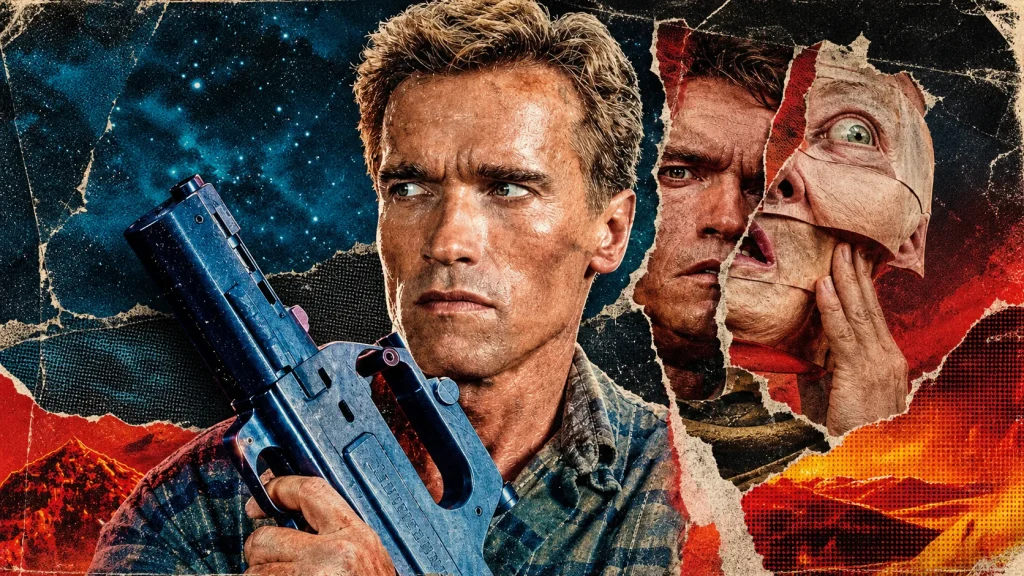
Doug Quaid describes himself as an ordinary construction worker. Arnold Schwarzenegger makes that claim hard to believe. He already looked and moved like an action hero in 1990, and the audience knew it.
Paul Verhoeven uses that problem instead of hiding it. Quaid may be a secret agent whose real identity is returning. He may also be an unhappy worker experiencing the fantasy he purchased from Rekall. Schwarzenegger makes either explanation possible.
Schwarzenegger Changes the Mystery
Philip K. Dick’s original character was a quiet office worker. Schwarzenegger brought a completely different presence to the film. Viewers had already seen him in The Terminator and Predator. They expected him to survive violence and know how to handle a weapon.
That expectation becomes part of the story. When Quaid fights like a trained agent, the audience accepts it before the film explains why. We have been trained by Schwarzenegger’s earlier roles to see his ability as natural.
This is close to the problem facing recognizable details in Neuromancer. Familiar images carry assumptions with them. A filmmaker can use those assumptions to deepen the story or leave them as empty references.
Rekall’s sales pitch makes the joke clearer. Quaid asks for a trip to Mars and chooses the secret-agent package. He buys the same Arnold Schwarzenegger adventure that the audience came to watch.
Someone Designed Quaid
The film gives us two main explanations. Quaid could be Hauser, an agent whose memory was erased by Cohaagen. He could also be sitting at Rekall while the company runs a fantasy through his mind.
Both versions turn identity into something another person can design. Cohaagen creates Quaid as a cover for Hauser. Rekall creates a heroic life for a paying customer. The disagreement concerns who did the programming.
That idea gives Total Recall its cyberpunk force. Cohaagen controls the air supply on Mars. Rekall sells control over memory. One company decides who can breathe, while the other can shape what a person believes about their own life.
Dr. Edgemar tries to convince Quaid that the adventure is a dream. A bead of sweat makes Quaid doubt him. The clue feels convincing, but the fantasy could have produced it. Verhoeven keeps giving us evidence and then showing how easily that evidence can be manufactured.
The final white flash works the same way. It could be sunlight on Mars. It could mark the end of the Rekall procedure. The film leaves both readings open.
The Action Hero Becomes Evidence
Schwarzenegger’s physical confidence supports the Hauser explanation. It also supports the fantasy explanation because Quaid ordered a life in which he would be powerful and admired.
That puts him near the cyberpunk heroes who work for the people controlling them. Quaid can fight back, but he never gains full knowledge of who he was or why he wants what he wants.
The casting works because Schwarzenegger seems so certain. We recognize the action hero immediately. Total Recall turns that recognition into another piece of unreliable evidence.
Daniel writes about cyberpunk, sci-fi, movies, TV, and technology. A lifelong Terminator fan, he’s drawn to stories about machines, identity, rebellion, and the future. CyberPVNK is where he puts those interests to work.