Published September 10, 2026
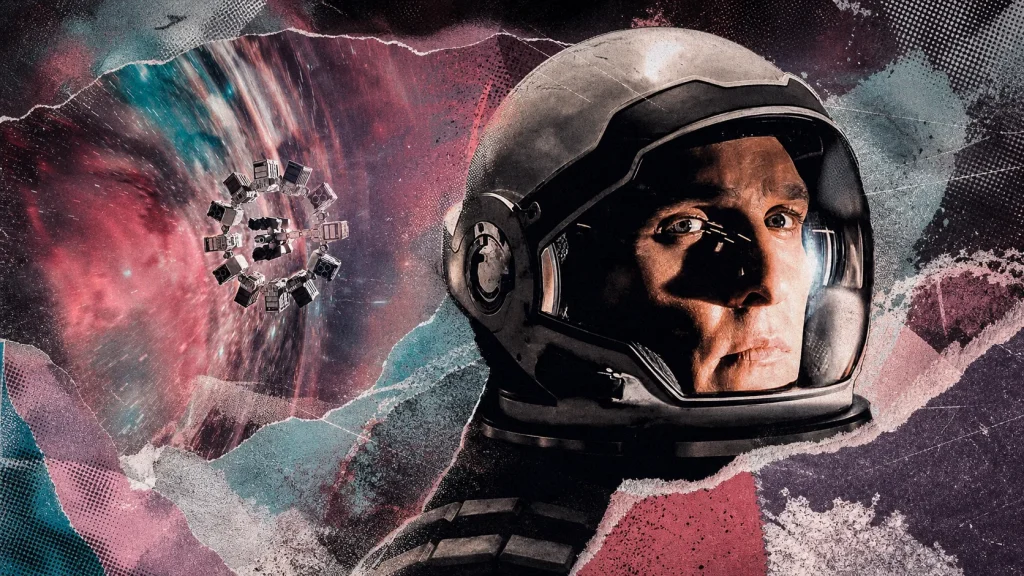
Cooper knows how to solve technical problems. He repairs farm equipment and flies spacecraft with the same confidence. The docking scene proves just how good he is. When the Endurance spins out of control, Cooper matches its rotation and saves the mission.
That confidence shapes the way he handles almost everything. He trusts skill because skill usually gives him an answer. Interstellar becomes more interesting when it places him in a situation that skill alone cannot fix.
Cooper Cannot Control the Tesseract
Inside the tesseract, Cooper can see different moments from Murf’s childhood. At first he tries to change the past. He pounds on the shelves and begs his younger self to stay home. Nothing he does prevents the departure.
The tesseract gives him access to Murf’s room across time, but it limits what he can do there. A similar problem appears in the way Neuromancer treats cyberspace. Entering a powerful system never guarantees control over it.
Cooper makes progress only after he accepts the past. The departure has already happened, so he looks for a way to help Murf in the present. The watch becomes useful because Murf remembers it and understands how her father communicates.
Love plays a practical role here. Murf still has to read the signal and solve the gravity equation. Cooper trusts that she can do both.
Murf Completes the Work
The film spends much of its running time presenting Cooper as the person who will save humanity. The ending quietly changes that idea. Cooper sends the quantum data, while Murf turns it into a solution that allows people to leave Earth.
This is where the film’s religious language becomes clearer. Kenosis is a theological term for voluntarily giving up status or power. Cooper goes through a version of that process. He accepts a smaller role and becomes the person who delivers information to someone else.
That role still matters. So does Murf’s. The rescue works because neither person can complete it alone.
Cyberpunk often follows characters who discover that access comes with limits set by someone else. Cooper faces a less hostile version of that problem. The beings behind the wormhole create an opportunity. They leave the human choices to Cooper and Murf.
The Ending Keeps the Cost Visible
Cooper’s reunion with Murf lasts only a few minutes. She has lived an entire life without him, while time dilation has kept him relatively young. Humanity survived, but Cooper never gets back the years he lost with his family.
That scene keeps the ending from feeling too easy. The technology works. The personal cost remains.
Murf then sends Cooper toward Brand. He leaves without proof that he will reach her. His decision reflects the kind of faith the film has been building toward. He acts with incomplete knowledge and accepts that he cannot control the outcome.
Interstellar works best as a cyberpunk-adjacent film. It asks a question that cyberpunk returns to often. How much agency does a person have inside a system they can access but cannot fully control? Cooper’s answer is to trust Murf with the part he cannot finish himself.

Daniel writes about cyberpunk, sci-fi, movies, TV, and technology. A lifelong Terminator fan, he’s drawn to stories about machines, identity, rebellion, and the future. CyberPVNK is where he puts those interests to work.